How Fast Does Hair Grow – Average Rate Per Month Explained
How fast does hair actually grow? It is a question with a surprisingly precise answer, though individual results vary significantly. Understanding the average rate of hair growth involves looking at established measurements, the biological cycle of the hair follicle, and the many factors that can speed up or slow down the process. This article breaks down the facts, from inches per month to the differences between men and women.
Human scalp hair does not grow at a uniform speed for everyone. However, a widely accepted average provides a reliable baseline. This figure, supported by organizations like The Trichological Society and numerous dermatological studies, helps set realistic expectations for anyone curious about their hair’s potential length over time.
How Fast Does Hair Grow Per Month?
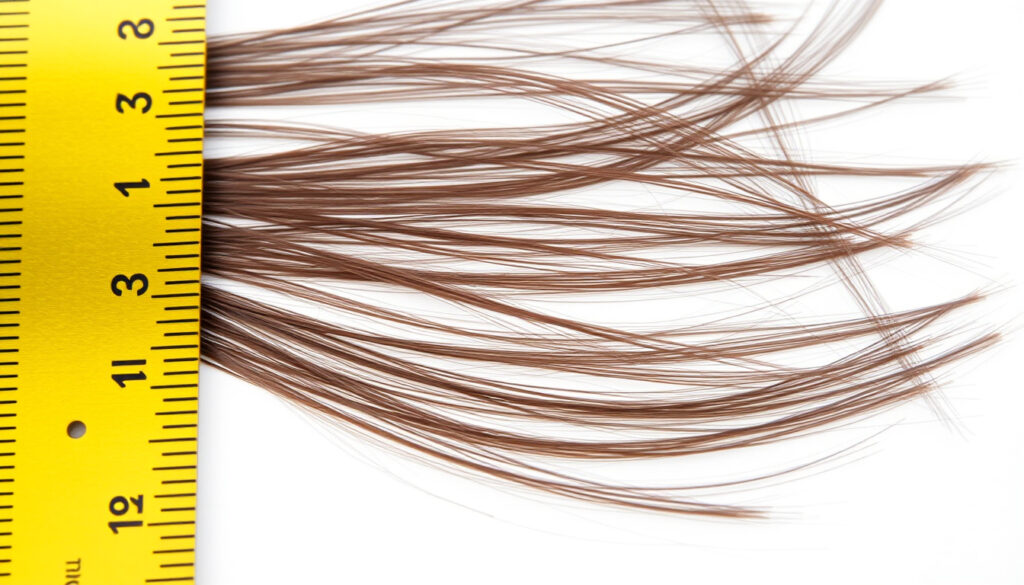
The most commonly cited average is that scalp hair grows about 0.5 inches (1.25 cm) per month. This translates to roughly six inches per year. However, reported ranges from various studies and health sources indicate a wider variation, from 0.5 cm to 1.7 cm per month.
A Quick Overview of Hair Growth
Average Rate
Approximately 0.5 inches (1.25 cm) per month, or 6 inches per year.
Key Factors
Genetics, age, diet, hormones, and overall health are the primary influencers.
Measurement Tips
Track growth monthly using a measuring tape from scalp to tip; take consistent photos.
Interventions
Medical options like minoxidil, PRP therapy, or hair transplants can affect growth rate.
Key Insights on Hair Growth Speed
- The average hair growth rate is about 0.5 inches per month, but individual variation is high.
- Hair growth slows with age due to a shorter anagen phase and smaller follicles.
- Men and women have similar scalp hair growth rates, but hormonal differences (e.g., pregnancy, menopause) can cause temporary changes.
- Ethnicity plays a minor role; Asian hair may grow slightly faster overall, but the difference is small.
- Hair growth per second is negligible (about 0.0000001 inches), but interesting for context.
- Growth rate can exceed 1 inch per month under optimal conditions with specific treatments.
Hair Growth Snapshot: Timeframes and Averages
| Timeframe | Rate (Inches) | Rate (cm) |
|---|---|---|
| Per day | 0.016 inches | 0.04 cm |
| Per week | 0.12 inches | 0.3 cm |
| Per 2 weeks | 0.25 inches | 0.6 cm |
| Per month | 0.5 inches | 1.25 cm |
| Per 3 months | 1.5 inches | 3.75 cm |
| Per year | 6 inches | 15 cm |
Does Hair Growth Rate Differ Between Men and Women?
Yes, there is a difference, though it is not always dramatic. According to data from sources like Erdem Hospital, men generally experience faster hair growth than women. This is largely attributed to hormonal differences, particularly the influence of testosterone.
Gender and Age Factors
While men may have a slight edge in speed, women’s hair growth can be significantly affected by hormonal shifts. Pregnancy, for example, can temporarily slow shedding and increase growth, while menopause often leads to thinning and a slower rate. Age is a major factor for both sexes. Growth peaks between the ages of 15 and 30, then gradually declines. This slowdown is linked to follicle miniaturization and reduced hormone levels.
Ethnicity and Growth Rate
Data from the Centre Clauderer indicates that ethnicity can influence the average growth rate. Asian hair is reported to grow at an average of 1.25 cm per month, while Caucasian hair grows at about 1 to 1.3 cm per month. Hair described as frizzy or mixed-texture was found to grow at a slightly slower rate of roughly 0.8 cm per month. These are averages, and individual variation within each group is considerable.
How to Measure Hair Growth in Centimeters?
For those tracking progress in metric units, the standard conversion is simple. Knowing that hair grows an average of 1.25 cm per month allows for easy projections. To measure accurately, use a flexible measuring tape from the scalp line along the hair shaft. Taking a photo from the same angle and distance each month provides a clear visual record.
For a precise month-to-month comparison, mark a small section of hair with a non-permanent colored thread or clip. Measure from the scalp to that marker at the end of each month. This eliminates guesswork and gives you a personal growth baseline, which may differ from the population average.
Understanding the Hair Growth Timeline
A significant portion of visible growth comes down to the hair’s life cycle, known as the hair growth cycle. Only when a hair is in the active growth phase does it increase in length.
- Anagen (Growth Phase): This is the active phase, lasting 2–7 years on the scalp. Approximately 85-90% of hairs are in this stage at any given time. This is where the ~0.5 inches per month growth occurs.
- Catagen (Transition Phase): A short transitional period lasting about 2–3 weeks where hair growth stops and the follicle shrinks.
- Telogen (Resting Phase): A resting period of about 3–4 months. The old hair eventually sheds, making way for a new anagen hair to begin growing.
The growth rates discussed apply specifically to the anagen phase (sprouting). The total visible length of a hair is determined by how long it stays in this phase before entering catagen and telogen. This is why some people can grow very long hair, while others find it stops at a certain length.
What Is Certain and What Remains Unclear About Hair Growth?
While the average rate is well-documented, several aspects of hair growth are subject to individual variation that is not yet fully predictable.
| Established Information | Information That Remains Unclear |
|---|---|
| The average growth rate for scalp hair is ~0.5 inches (1.25 cm) per month. | Why individual rates can vary by up to 20% from the average due to genetics and health. |
| Growth slows with age, particularly after 30. | The exact per-second rate, which is a mathematical calculation rather than a directly measured value. |
| The three-phase hair growth cycle (anagen, catagen, telogen) is a biological fact. | How specific combinations of environmental and genetic factors affect anagen phase length in one person vs. another. |
What Factors Influence Hair Growth Speed?
Hair growth does not happen in a vacuum. It is a biological process deeply connected to overall health. The Human Hair Growth article on Wikipedia notes that hair follows a specific growth cycle, and this cycle is influenced by blood flow, nutrition, and hormones. Scalp hair grows faster than eyebrow or body hair. Conditions like alopecia or thyroid disorders can disrupt the normal rate significantly.
Genetics is the primary determinant, setting the baseline for potential growth speed and maximum length. Diet also plays a crucial role. Deficiencies in protein, iron, and certain vitamins like biotin can slow growth. Stress and poor scalp health are additional factors that can negatively impact the rate. Genetics is the primary determinant, setting the baseline for potential growth speed and maximum length, and you can learn more about the word cheating definition here.
What Do the Experts and Sources Say?
The scientific consensus on hair growth speed is supported by peer-reviewed research and established health authorities. A 2009 study published in the European Journal of Dermatology found Caucasian hair grows at an average of 1.3 cm per month. The Trichological Society reports a broader range of 0.5 to 1.7 cm per month.
“Hair follows a specific growth cycle with three distinct and concurrent phases: anagen, catagen, and telogen.”
— Wikipedia – Human Hair Growth
“On average, hair grows at a rate of about half an inch per month, or six inches per year.”
— Kiehl’s
“During the anagen phase, your hair grows around half an inch a month – this lasts an average of three to five years.”
— Vogue UK
What Is the Next Step for Understanding Your Hair Growth?
Understanding the average Average Human Hair Growth Rates provides a useful benchmark. To maximize your own hair’s potential, focus on modifiable factors. Maintain a balanced diet rich in protein, iron, and vitamins. Reduce heat styling and consider regular scalp massages to stimulate circulation. If you notice a sudden change in growth rate or excessive shedding, consulting a dermatologist is a reliable next step.
Frequently Asked Questions
How quickly does hair grow?
The average scalp hair grows about 0.5 inches (1.25 cm) per month, which translates to roughly 6 inches per year.
What is the hair transplant cost?
Hair transplant costs vary widely based on location, clinic, and number of grafts, typically ranging from $4,000 to $15,000 per session.
Why do Turkey hair transplants have high search interest?
Turkey is a popular destination for hair transplants due to lower cost and high-volume clinics, but quality varies. Always research clinics thoroughly.
How fast does hair grow in 1 week?
On average, hair grows about 0.12 inches (0.3 cm) per week.
How fast does hair grow per second?
Mathematically, hair grows at an estimated 0.0000001 inches per second, a negligible amount for practical purposes.
What is the hair growth cycle?
It consists of three phases: Anagen (growth, 2-7 years), Catagen (transition, 2-3 weeks), and Telogen (resting, 3-4 months).
Can hair growth be boosted?
Yes, certain treatments like minoxidil, PRP therapy, and laser therapy may boost growth. A healthy diet and scalp care also help.
Does age affect hair growth?
Yes, hair growth peaks between ages 15 and 30 and slows down after 30 due to follicle changes and hormone levels.
More related posts
 Pakistan National Cricket Team vs New Zealand National Cricket Team – 7-Wicket Win and Full Scorecard
 Time in Melbourne Now – Current AEST, DST and Time Zone Guide
 How Many Units Can You Drive On – UK Drink Drive Limits
 Next UK Bank Holiday – May 5 2025 and Full Calendar
 La Liga 2 Standings – Live 2024/25 Table and Promotion Race
 Can You Take Paracetamol With Naproxen – NHS Safety and Dosage Guide
 Andrew Barth Feldman Movies and TV Shows – Complete Filmography 2025
 Nike Jordan UK 2025 Guide – Models, Prices & Authenticity