Equestrian Property for Sale – UK Buyer’s Guide & Tips
The market for equestrian property in the UK remains a niche but resilient sector, driven by lifestyle buyers, remote workers, and investors seeking land assets. Value in this segment is determined less by the house alone and more by the quality of land, facilities, access, and planning position. Current commentary points to tight supply and firm prices, with demand consistently outstripping inventory in many regions.
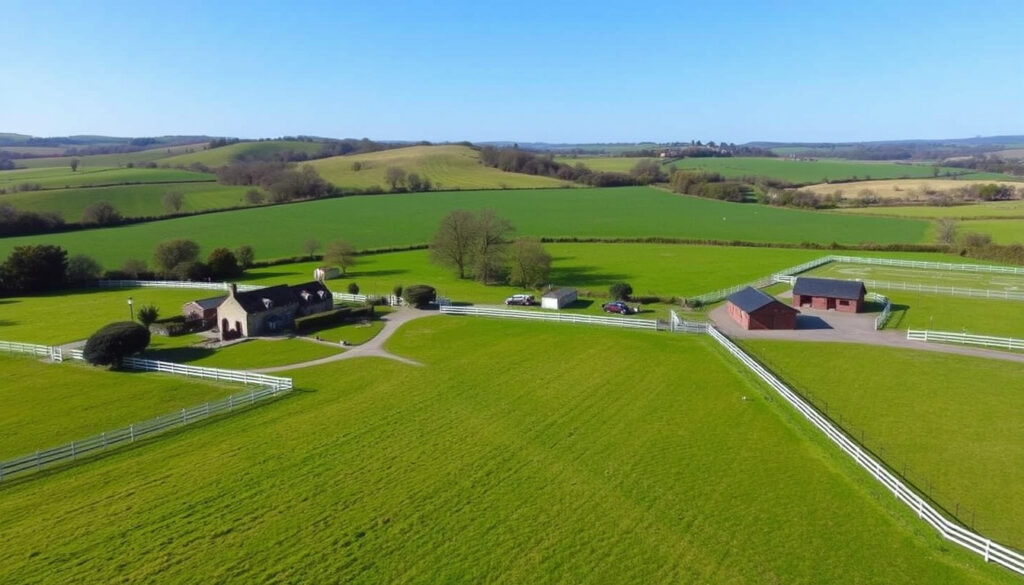
Buyers are advised to assess any property as an operating horse setup rather than just a rural home. Acreage, stables, barn storage, arena, fencing, water supply, drainage, and trailer access are the core components that determine whether a property can support intended use now and in the future. Specialist guidance from equestrian-focused agents, surveyors, and solicitors is often recommended to avoid costly mistakes.
The post-pandemic shift to rural living has expanded the buyer pool beyond traditional commuting patterns, and investor interest in land has added further pressure in some segments. Properties presented as turnkey equestrian lifestyles with professional photography and drone imagery tend to attract the strongest interest, according to market sources.
Where Can I Find Equestrian Property for Sale Near Me?
Location Hotspots
Popular regions include the Home Counties (Surrey, Lancashire), Wales, Scotland, and areas near London and Manchester.
Price Ranges
From budget smallholdings to luxury estates. Cheaper options exist in less central areas such as rural Wales and northern England.
Essential Facilities
Stables, turnout, indoor/outdoor arena, hay storage, tack room, and reliable water supply are key features.
Top Listing Platforms
Rightmove, Savills, Equus Property, Rettie, UK Land & Farms, and specialist niche sites offer equestrian-focused listings.
Key Insights for Buyers
- Prioritize location near hacking routes and vet access. Fine & Country emphasises safe road access and proximity to riding trails.
- Check planning permissions for additional equestrian buildings – horses are not automatically allowed without local authority approval. Michael Graham advises verifying permitted use early.
- Factor in maintenance costs for arenas and fencing. Resurfacing an outdoor arena can be a significant expense even if the surface looks adequate.
- Consider future resale value and the strength of the local horse community; a property in an area with active riding clubs may hold value better.
- Supply is limited for horse-ready properties, particularly those with maintained barns, arenas, and usable acreage, according to horseproperties.net market commentary.
- Prices have remained firm because demand exceeds inventory, driven by lifestyle buyers, remote workers, and some investor interest.
- Inspecting the horse infrastructure separately from the house is critical – barns, fencing, school surface, and yard layout materially affect value and usability, notes The Ivybridge Collection.
Snapshot: Equestrian Property Facts
| Factor | Details |
|---|---|
| Common property types | Smallholding, livery yard, stud farm, country estate |
| Typical acreage | 2–20+ acres for hobby keep; larger for commercial operations |
| Average price (UK, 2025) | Highly variable by region; £300k–£1M+ |
| Most sought-after features | All-weather arena, stable block (3+ boxes), turnout paddocks, tack room |
| Supply trend | Tight – many markets see limited inventory of horse-ready properties |
| Demand drivers | Lifestyle buyers, remote workers, hobby farmers, investors |
| Key region premiums | Surrey and Lancashire command higher prices; Wales offers lower entry points |
| Common pitfalls | Overlooking planning restrictions, drainage issues, and fencing condition |
Are There Cheap Equestrian Properties for Sale?
Yes, cheaper equestrian properties exist, but they typically come with trade-offs in location, facility condition, or acreage. Rural areas in Wales, northern England (Lancashire, Yorkshire), and parts of Scotland tend to have lower entry prices. Smallholdings with basic stabling can start around £250,000 in less central regions, while a comparable property in Surrey may exceed £1 million.
What to Look for in a Budget Property
Properties needing renovation or with older outbuildings often appear at lower price points. However, the cost of upgrading fencing, drainage, or arena surfaces can be significant. American Stalls recommends budgeting for such repairs even when a property looks turnkey. Buyers should also check whether the land is suitable for grazing year-round and whether water supply is reliable.
Set up alerts on Rightmove and niche equestrian sites for properties with stabling in less popular regions. Consider using specialist rural lenders who may offer better terms for land-heavy properties. Beware of cheap listings with poor access or restrictive covenants that could limit horse use.
Geographic Price Differences
- Surrey and the Home Counties: high demand, limited supply, prices from £800k to £2M+
- Lancashire and northern England: moderate demand, more affordable options (£400k–£800k)
- Wales: lower land values, starter properties from £250k, but remote from major cities
- Scotland: competitive market in the Central Belt; cheaper in the Highlands and Borders
Which Platforms List Equestrian Property for Sale?
Several platforms cater to equestrian property searches, ranging from general portals with filters to specialist agent sites. Rightmove remains the most visited property portal in the UK and lists a high volume of equestrian properties under its farm and land categories. Savills offers a dedicated equestrian search with high-end listings, while niche platforms such as Equus Property focus entirely on horse-related real estate.
General Portals
Rightmove allows users to filter by property type (farms, smallholdings) and often includes keywords such as “stables” or “equestrian” in descriptions. The platform is useful for broad searches but may lack the detailed facility breakdowns that serious buyers need.
Specialist Estate Agents
Equus Property, Rettie, and UK Land & Farms operate with a focus on rural and equestrian properties. These agents provide expert valuations, market reports, and often have a better understanding of planning permissions and land management. Rettie is particularly strong for Scotland, while UK Land & Farms covers agricultural and equestrian land across England and Wales.
Use general portals for initial discovery, then switch to specialist agents for serious viewings. Savills and niche sites often have exclusives that never appear on Rightmove. Bookmark the “equestrian” category on each platform to receive email alerts.
Timeline: Steps to Buying an Equestrian Property
- Define requirements – Determine facilities needed (stables, arena, turnout acreage), preferred location, and budget.
- Search listings on multiple platforms, including Rightmove, Savills, Equus Property, and local agents. Use saved searches for automatic updates.
- View properties with an equestrian checklist covering land suitability, barn condition, fencing, water, drainage, and access for trailers.
- Obtain professional surveys – Structural survey of house and outbuildings, plus land and drainage assessments by a specialist.
- Secure finance – Approach specialist rural lenders or agricultural mortgage advisors, especially if the property has livery income potential.
- Legal checks – Verify grazing rights, public footpaths, covenants, and planning restrictions with a solicitor experienced in rural property.
- Complete purchase and plan the move of horses, including biosecurity protocols and fencing checks.
Certainty vs Uncertainty When Buying Equestrian Property
| Established Information | Information That Remains Unclear |
|---|---|
| Location strongly affects price and availability – Surrey and the Home Counties command premiums; Wales and northern England offer lower entry points. | Exact price per region varies weekly; consult current listings for up-to-date data rather than relying on broad averages. |
| Facilities like arenas and stable blocks add value but require ongoing maintenance and occasional resurfacing. | Whether a property will have permitted development rights for new stables or arenas is case-specific and depends on local planning authority decisions. |
| Rightmove lists a high volume of equestrian properties, but specialist agents often have off-market or exclusive listings. | Future changes in land use regulations could affect the ability to expand facilities or change use from agricultural to equestrian. |
| Professional surveys and legal checks are essential to uncover drainage issues, rights of way, and planning restrictions. | The exact condition of unseen infrastructure (e.g., arena sub-base, underground water pipes) may only be revealed after purchase unless intrusive surveys are done. |
Equestrian Property Market Trends & Context
The post-pandemic shift to rural living increased demand for equestrian properties as more buyers sought privacy, outdoor space, and wellness-oriented lifestyles. Remote work expanded the buyer pool beyond traditional commuting patterns, allowing people to consider properties further from major employment hubs.
Sellers often value equestrian facilities separately from the house, meaning standard residential comparables may not reflect the true worth of a property with stables, arenas, and managed pasture. Specialist agents therefore use broader rural and agricultural comparables, as noted by Rob Smith Real Estate.
Key regions such as Surrey and Lancashire command premiums because of proximity to horse‑rich communities and good transport links. Wales offers cheaper options, but buyers must weigh the lower cost against longer travel distances to equestrian services and trail networks. Niche platforms like equestrianproperty4sale.com provide focused listings that can be more effective than general portal searches for serious buyers.
Expert Sources on Equestrian Property
- Savills – UK market reports and high-end listings; known for detailed property descriptions and expert agent input.
- Equus Property – Specialist agent with an in‑depth blog covering the buying process and common pitfalls.
- Rettie – Regional agent focusing on Scotland with local market knowledge and RICS regulation.
- UK Land & Farms – Land agent with expertise in agricultural and equestrian property across England and Wales.
- Horse Properties Network – Niche resource providing market commentary and buyer tips for equestrian real estate.
- Fine & Country – National estate agency with a guide to buying equestrian property covering planning, access, and land quality.
What Is the Bottom Line for Equestrian Property Buyers?
The market remains supply‑constrained, with the best properties moving quickly. Buyers should prioritise functionality – access, legal use, land quality, and infrastructure – over appearance. Engaging specialists early (agent, surveyor, solicitor) and inspecting the horse infrastructure separately from the house are essential steps. Properties presented as turnkey equestrian lifestyles with professional photography and drone imagery tend to attract the strongest interest, according to market sources.
Frequently Asked Questions
Where can I find equestrian property for sale near me?
Popular regions include the Home Counties (Surrey, Lancashire), Wales, Scotland, and areas near London and Manchester. Use listing platforms such as Rightmove, Savills, Equus Property, Rettie, UK Land & Farms, and specialist niche sites.
Are there cheap equestrian properties for sale?
Yes, cheaper properties exist but often come with trade-offs in location, facility condition, or acreage. Rural Wales, northern England (Lancashire, Yorkshire), and parts of Scotland offer more affordable entry points.
Which platforms list equestrian property for sale?
General portals like Rightmove, specialist agents like Savills, Equus Property, Rettie, and UK Land & Farms all list equestrian properties. Niche sites such as equestrianproperty4sale.com also provide focused listings.
More related posts
 English Premier League Standings 2025-2026 – Live Table, Qualification, and Key Facts
 Codes for Blox Fruits – 10 Active Rewards March 2026
 Argos Xbox Series X – Stock, Price, Deals and Delivery 2025
 Autumn Wedding Guest Dresses – Best 2025 UK Guide for Over 50s
 Forrie J. Smith – Biography, Net Worth, and Yellowstone Role
 Pet Drugs Online UK – Reviews, Ordering and Contact Guide
 When Is Stranger Things Season 5 Coming Out – Release Dates and Episode Guide
 World Stock Markets Today – Live Indices and Performance