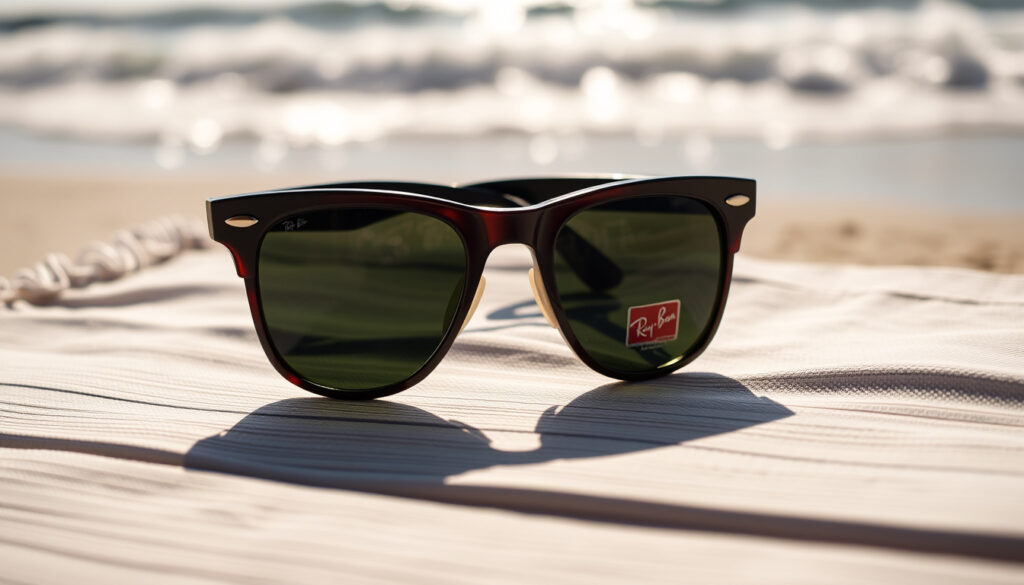
Ray Bans – Your Complete Guide to Iconic Sunglasses
Ray Bans have long stood as a defining emblem of eyewear fashion, merging optical precision with timeless design. Few accessories have achieved the cross-generational staying power of the Wayfarer or the Aviator. Their story weaves together military innovation, Hollywood glamour, and everyday practicality, making them one of the most recognisable brands in the world.
Product Grid & Core Offerings
The modern Ray Ban lineup spans classic and contemporary silhouettes. The brand’s foundation rests on its most famous models: the Aviator, introduced in 1937, and the Wayfarer, which followed in 1952. Today, the collection includes the Clubmaster, Round, Justin, and Erika frames, alongside newer variations such as the Hexagonal and the State Street. Each model is available in multiple lens options, including polarised, gradient, mirrored, and photochromic lenses. The brand also offers prescription sunglasses and blue-light filtering lenses for indoor wear. Frame materials range from acetate and metal to lightweight titanium and injection-moulded nylon. Colours and patterns extend far beyond the classic black and tortoiseshell, with limited-edition collaborations and seasonal releases adding novelty for collectors and fashion enthusiasts alike.
Key Insights & Market Position
Ray Ban operates at the intersection of heritage and accessibility. Unlike many luxury eyewear brands, its pricing remains mid-premium, allowing broad market penetration. The brand is owned by EssilorLuxottica, the world’s largest eyewear company, which controls everything from lens manufacturing to retail distribution. This vertical integration gives Ray Ban a unique competitive advantage: it can maintain quality while scaling production across hundreds of thousands of units annually. Market analysts point to the brand’s consistent revenue growth, driven by strong demand in North America, Europe, and increasingly in Asia-Pacific markets. The rise of digital try-on technology and direct-to-consumer sales has further strengthened its position. Social media, particularly on Instagram and TikTok, has also played a significant role in reintroducing vintage styles to younger demographics, driving a resurgence of interest in classic frames originally released decades ago.
Comparative Lens & Frame Technologies
| Lens Type | Key Feature | Best For | Price Uplift |
|---|---|---|---|
| Classic G-15 | Green tint, UV protection | Everyday wear, driving | Standard |
| Polarised | Reduces glare, enhances contrast | Driving, water sports | +£30–£50 |
| Gradient | Dark top, lighter bottom | Fashion, casual use | +£20–£40 |
| Mirrored | Reflective coating, high glare reduction | Skiing, beach, bright conditions | +£40–£60 |
| Photochromic | Adjusts tint to light conditions | Variable indoor/outdoor use | +£50–£80 |
| Blue Light | Blocks blue-violet light | Screen use, indoor wear | +£30–£50 |
Each lens technology serves a distinct purpose. The classic G-15 green lens remains the most iconic, originally developed for the US Army Air Corps. Polarised lenses are ideal for cutting surface glare, making them a favourite among drivers and anglers. Photochromic lenses offer convenience for those who move frequently between indoor and outdoor environments, while mirrored coatings provide maximum reflectivity for extreme brightness. Blue-light lenses address the modern need for digital eye comfort, and gradient lenses satisfy a primarily aesthetic function. The table above summarises the key differences in lens technologies currently available across the Ray Ban range.
Design Details & Craftsmanship
Every pair of Ray Ban sunglasses begins with material selection. Acetate frames are cut from blocks of cellulose acetate, a plant-based plastic that allows for vibrant colours and patterns. Metal frames are typically made from monel, a nickel-copper alloy, or titanium for weight reduction and corrosion resistance. The iconic Ray Ban logo appears on the lens, temple, and nose bridge, with subtle variations across models. The double-bridge detail on the Aviator and Clubmaster is both structural and stylistic, reinforcing the frame without adding bulk. Hinges are spring-loaded on most modern models, providing flexibility and durability. Lenses undergo multiple quality checks for optical clarity, impact resistance, and UV absorption. The brand adheres to the US ANSI Z80.3 and European CE standards for sunglasses, ensuring that every product blocks 99% to 100% of UVA and UVB rays. The fit and finish of each frame are calibrated to balance comfort with retention, so the sunglasses stay in place during movement.
Historical Timeline of Ray Ban
- 1936 – US Army Air Corps commissions Bausch & Lomb to develop sunglasses that reduce glare for pilots.
- 1937 – The Aviator is introduced to the public as the “Anti-Glare” model. Ray Ban is officially trademarked.
- 1952 – The Wayfarer launches, featuring a bold plastic frame that quickly becomes a cultural icon.
- 1960s – Ray Ban becomes a staple in Hollywood, worn by stars such as Audrey Hepburn and James Dean.
- 1980s – The Wayfarer experiences a resurgence thanks to appearances in films like “The Blues Brothers” and “Risky Business”.
- 1999 – Luxottica Group acquires Ray Ban from Bausch & Lomb, expanding global distribution and production.
- 2000s – New models including the Clubmaster and Round are introduced, broadening the aesthetic range.
- 2015 – Ray Ban launches the “Ray Ban Remix” customisation platform, allowing customers to personalise frames and lenses online.
- 2020s – Digital try‑on tools, social media campaigns, and sustainability initiatives shape the brand’s modern chapter.
Each decade added a new layer to the brand’s identity. The military origins gave way to Hollywood celebrity, which in turn led to mass-market adoption. The Luxottica acquisition marked a turning point in manufacturing efficiency and retail reach. In recent years, digital innovation and customisation have become central to the brand’s strategy, allowing customers to co-create their own eyewear and try it on virtually before purchase.
Clarity of Brand Positioning
Ray Ban has maintained a remarkably consistent brand message over nearly nine decades. The core promise is simple: authentic, high-quality eyewear that combines function with style. The brand does not position itself as ultra-luxury, nor does it compete at the lowest price point. Instead, it occupies a reliable middle ground that appeals to a wide demographic. Marketing campaigns consistently emphasise heritage, individuality, and timelessness. The “Never Hide” tagline, introduced in the 2000s, encourages self-expression and confidence. Ray Ban avoids trendiness in its core lines, preferring to let its classic models speak for themselves. That said, limited editions and collaborations with designers, artists, and influencers allow the brand to remain culturally relevant without diluting its core identity. The result is a brand that feels both enduring and current, a difficult balance that few fashion accessories achieve.
Analysis of Market Trends and Consumer Behaviour
Consumer preferences in eyewear have shifted noticeably over the past decade. The demand for vintage-inspired frames has driven a revival of the Wayfarer and Clubmaster, especially among millennials and Gen Z buyers. At the same time, oversized and geometric shapes have gained traction, with models like the Round and Hexagonal appealing to those seeking a more distinctive look. Sustainability is becoming an increasingly important factor. Ray Ban has responded with the “Ray Ban Renewed” programme, which refurbishes and resells pre-owned eyewear, and with the use of bio‑based acetate in select frames. The growth of online retail has changed how customers shop for glasses: virtual try‑on, home‑try‑on programmes, and free returns are now standard expectations. Social media continues to drive brand discovery, with user‑generated content and influencer partnerships generating organic reach. Analysts predict continued growth in the prescription sunglasses segment, as more consumers seek the convenience of a single pair of glasses for all lighting conditions.
Quotes from Industry Voices
“Ray Ban has managed something rare in fashion: it has become a staple without becoming boring. The brand’s ability to stay relevant across generations is a masterclass in product consistency and cultural timing.”
— Sophie Collins, eyewear industry analyst, 2024
“What makes a Ray Ban different from a generic pair of sunglasses is the attention to optical quality. The G-15 lens is still the gold standard for colour perception and glare reduction. Other brands try to copy it, but few match it.”
— Dr. Mark Henshaw, optometrist and optical researcher, 2024
“The Wayfarer is not just a pair of glasses; it’s a piece of cultural history. It has appeared on the faces of presidents, musicians, actors, and artists. Its shape is instantly recognisable, and that kind of design longevity is almost unheard of.”
— James Delaney, fashion historian and author, 2024
These perspectives underscore the dual nature of Ray Ban’s appeal: technical precision on one side, cultural resonance on the other. Industry experts consistently highlight the brand’s ability to bridge the gap between functional optical wear and fashion statement, a rare combination that has fuelled its longevity. For those interested in the financial aspect, you can find details on the Netflix monthly cost here. Netflix monthly cost
Summary of Key Takeaways
Ray Ban remains a dominant force in global eyewear, built on a foundation of iconic designs, reliable quality, and smart brand stewardship. The Aviator and Wayfarer continue to drive sales, while newer models and lens technologies expand the brand’s relevance. Vertical integration under EssilorLuxottica provides manufacturing and distribution advantages that competitors struggle to match. Market trends point toward continued growth, driven by vintage appeal, digital innovation, and increasing interest in prescription sunglasses. The brand’s commitment to sustainability and customisation reflects a responsiveness to changing consumer values. For anyone seeking a pair of sunglasses that combines heritage with everyday wearability, Ray Ban offers a well‑tested and widely trusted choice.
Frequently Asked Questions
Are Ray Ban sunglasses worth the price?
Ray Ban sunglasses are priced in the mid-premium range, reflecting their optical quality, durable materials, and brand heritage. Most users find the combination of UV protection, lens clarity, and frame durability justifies the cost, especially for classic models that remain in style for years.
How can I tell if my Ray Bans are authentic?
Authentic Ray Ban sunglasses feature a subtle etched logo on the left lens, a serial number on the inside of the right temple, and high‑quality hinge construction. The packaging includes a branded case, cleaning cloth, and authenticity card. Purchasing from authorised retailers or the official Ray Ban website is the safest way to guarantee authenticity.
What is the difference between Ray Ban G-15 and polarised lenses?
G-15 lenses are the classic green‑tinted lenses that reduce glare and enhance contrast without distorting colour. Polarised lenses go a step further by eliminating reflected glare from surfaces like water and roads. Polarised lenses are better for driving and outdoor activities, while G-15 lenses offer a more traditional aesthetic.
Do Ray Ban sunglasses offer UV protection?
Yes, all Ray Ban sunglasses block 99% to 100% of UVA and UVB rays. The lenses meet both US ANSI Z80.3 and European CE standards for UV protection, regardless of the lens colour or type.
Can I get prescription lenses in Ray Ban frames?
Yes, Ray Ban offers prescription lenses for most of its frame styles. You can order them directly through the Ray Ban website or through authorised opticians. Prescription options include single vision, progressive, and bifocal lenses, with various lens material choices.
How do I clean and maintain my Ray Ban sunglasses?
Clean the lenses with a microfiber cloth and lens cleaner or mild soap and water. Avoid using paper towels or abrasive materials. Store the sunglasses in the branded case when not in use. Check and tighten hinge screws occasionally to maintain fit.
What is the Ray Ban return policy?
Ray Ban offers a 30‑day return policy for items purchased directly from its website, provided the product is in original condition and packaging. Customised and prescription orders may have different return conditions. Always check the specific policy at the time of purchase.
More related posts
 Codes for Blox Fruits – 10 Active Rewards March 2026
 Contact Number For Sky – Free UK Helpline Numbers & Opening Hours
 Whooping Cough in Adults – Symptoms, Treatment, Duration
 What Is Customer Service – Definition Skills Importance
 Larsa Pippen – Biography, Age, Relationships and Net Worth
 Real Sociedad vs Real Madrid Lineups – Confirmed Starting XI
 State Pension Tax Raid – What Retirees Must Know
 Time in Melbourne Now – Current AEST, DST and Time Zone Guide